
Value of all cryptocurrencies
The site has a low minimum deposit limit and processes most deposits and withdrawals almost instantly, with no processing fees. The platform is supported by top-tier software providers and has a 24/7 live chat feature for customer support playtech bingo. Winz is a trusted and reputable online casino that offers a wide range of games and a comprehensive sportsbook for players looking to enjoy online gambling with cryptocurrency. Its user-friendly interface, a wide range of payment options, and generous bonuses make it a popular choice among players.
Cryptocurrency values do fluctuate but seldom experience drastic drops. Often, your crypto deposits will appreciate over time, offering you the potential to gain more than you would at traditional online casinos.
In addition to the Welcome Bonus, Crypto-Games players can look forward to special jackpot promotions and a 10% weekly rakeback. There’s also a promotion that allows players to earn rewards by referring their friends. For returning and loyal players, Crypto-Games runs a special promotion called “Level Up”, which is essentially a VIP system that rewards players based on their playing habits. The premise is simple: the more you play, the higher the rewards. The highest level allows players to earn as much as 25% rakeback and unlock 600 free spins. Overall, Crypto-Games provides a healthy mixture of fun games, solid rewards, and a great user experience.
Are all cryptocurrencies based on blockchain
The decentralized nature of the blockchain network ensures that no single entity controls the system, allowing for a secure and transparent system that supports the cryptocurrency network. Blockchain provides the infrastructure that supports the cryptocurrency network, ensuring the integrity and accuracy of all transactions.
Bitcoin was the first cryptocurrency to see the light of day, back in 2009. But it wasn’t the cryptocurrency alone that prompted such international interest. Many believe that the more important novelty was Bitcoin’s underlying blockchain technology. Introducing decentralized peer-to-peer blockchains, the technology took the world by storm. For a few years, blockchain ledgers were the defining characteristic of any cryptocurrency. But that all changed with the official launch of IOTA.
A consensus algorithm is the third component. And last but not least, there is the issue of punishment and reward. Game Theory is where the latter comes from. It ensures that people will always follow the rules in their best interests. Each time users establish a consensus and add a new block to the chain, they receive a token or coin. Punishment for bad actors, on the other hand, is a loss of money spent on computational power.
IOTA replaced the traditional blockchain-based distributed ledger with a so-called directed acyclic graph (DAG). The IOTA protocol operates with a DAG-based consensus algorithm which the IOTA team have termed Tangle. Though still in development, Tangle is eventually intended to work as a distributed ledger similar to blockchains, but with a unique twist. A trader who makes a transaction must confirm two random previous transactions. Each of these two will have validated two other transactions before, and so on. The end result is not that transactions are grouped into blocks and stored in a blockchain. Rather, it is a stream of individual transactions entangled together.
Most public blockchains arrive at consensus by either a proof-of-work or proof-of-stake system. In a proof-of-work system, the first node, or participant, to verify a new data addition or transaction on the digital ledger receives a certain number of tokens as a reward. To complete the verification process, the participant, or “miner,” must solve a cryptographic question. The first miner who solves the puzzle is awarded the tokens.
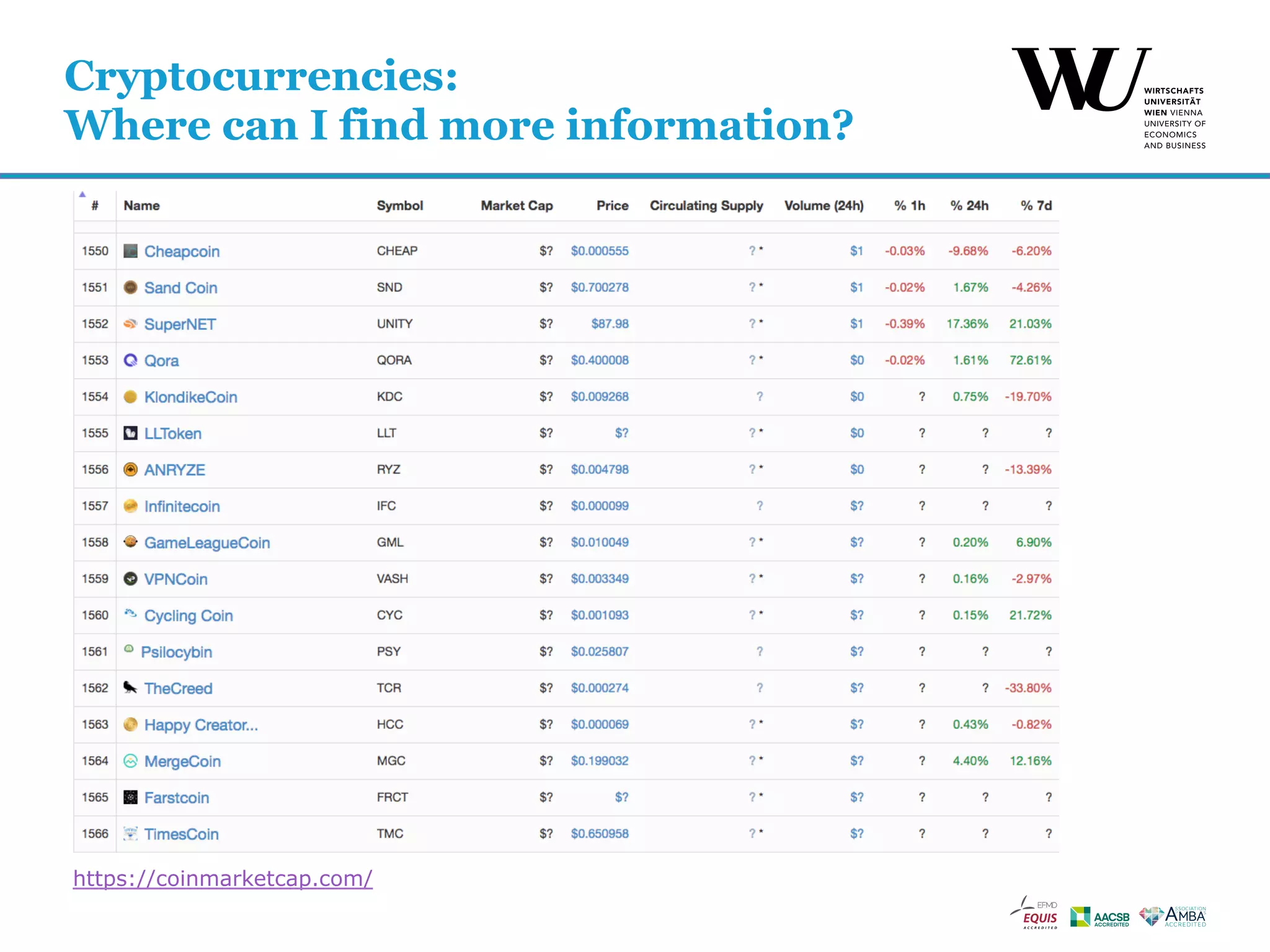
All the cryptocurrencies
Play-to-earn (P2E) games, also known as GameFi, has emerged as an extremely popular category in the crypto space. It combines non-fungible tokens (NFT), in-game crypto tokens, decentralized finance (DeFi) elements and sometimes even metaverse applications. Players have an opportunity to generate revenue by giving their time (and sometimes capital) and playing these games.
Welcome to CoinMarketCap.com! This site was founded in May 2013 by Brandon Chez to provide up-to-date cryptocurrency prices, charts and data about the emerging cryptocurrency markets. Since then, the world of blockchain and cryptocurrency has grown exponentially and we are very proud to have grown with it. We take our data very seriously and we do not change our data to fit any narrative: we stand for accurately, timely and unbiased information.
Our table is initially sorted by market cap size. To identify the top crypto losers within the visible list, click on the “Change (24h)” column header. This will sort the cryptocurrencies based on their percentage changes over the last 24 hours. Click the header again to reverse the order and display the top losers at the top of the list.
Price volatility has long been one of the features of the cryptocurrency market. When asset prices move quickly in either direction and the market itself is relatively thin, it can sometimes be difficult to conduct transactions as might be needed. To overcome this problem, a new type of cryptocurrency tied in value to existing currencies — ranging from the U.S. dollar, other fiats or even other cryptocurrencies — arose. These new cryptocurrency are known as stablecoins, and they can be used for a multitude of purposes due to their stability.
A coin refers to cryptocurrencies and tokens, digital assets created and managed on blockchain networks. A cryptocurrency, also known as ‘crypto,’ is a digital currency that uses cryptography for security and operates on a decentralized blockchain network. Cryptocurrencies are native coins of their respective blockchains used to pay transaction fees and facilitate transactions within that network. Examples of cryptocurrencies include Bitcoin (BTC) and Ethereum (ETH).
The cryptocurrency was invented by an anonymous individual or group of individuals using the pseudonym Satoshi Nakamoto, who introduced Bitcoin in a white paper published in 2008. The identity of Satoshi Nakamoto remains a mystery, but their groundbreaking invention has inspired the development of numerous other cryptocurrencies. To learn more about Satoshi Nakamoto, read our in-depth article at